
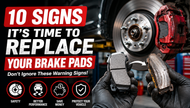
Your vehicle's braking system is one of the most important safety components on the road. Whether you're driving through city traffic, towing a trailer, commuting to work, or taking a long road trip, properly functioning brake pads are essential for maintaining control and protecting yourself and others.
Unfortunately, brake pads don't last forever. Over time, friction wears down the braking material, reducing stopping power and increasing the risk of expensive brake system repairs.
Recognizing the early warning signs of worn brake pads can help you avoid costly repairs, maintain peak braking performance, and stay safe behind the wheel.
In this guide, we'll cover the 10 most common signs it's time to replace your brake pads, along with maintenance tips and expert recommendations for drivers across the United States.
Why Brake Pads Matter
Brake pads create friction against the brake rotors when you press the brake pedal. This friction slows and stops your vehicle.
Because brake pads absorb tremendous heat and pressure during daily driving, they naturally wear down over time.
Ignoring worn brake pads can lead to:
- Reduced stopping power
- Rotor damage
- Increased repair costs
- Poor vehicle handling
- Unsafe driving conditions
Replacing brake pads at the right time helps protect your entire braking system while maintaining maximum safety.
1. Squealing or Screeching Noises
One of the earliest signs of brake pad wear is a high-pitched squealing sound when braking.
Many brake pads include built-in wear indicators that create a squealing noise once the friction material becomes too thin.
If you hear squealing every time you apply the brakes, it's time to inspect your braking system.
Common Causes:
- Worn brake pads
- Moisture on rotors
- Dust buildup
- Glazed brake surfaces
Persistent squealing should never be ignored.
2. Grinding Sounds While Braking
Grinding noises are often a sign that brake pad material has been completely worn away.
When this happens, the metal backing plate can come into direct contact with the brake rotor.
This metal-on-metal contact can quickly damage expensive brake components.
Immediate Risks:
- Rotor damage
- Increased stopping distance
- Reduced braking performance
- Higher repair costs
If your brakes are grinding, schedule an inspection immediately.
3. Longer Stopping Distances
Has your vehicle started taking longer to stop?
Extended stopping distances often indicate worn brake pads that are no longer generating enough friction.
This issue becomes especially dangerous during:
- Heavy traffic
- Emergency braking situations
- Wet weather conditions
- Highway driving
Any noticeable reduction in braking responsiveness should be investigated promptly.
4. Brake Warning Light Appears
Many modern vehicles include brake wear sensors that monitor brake pad thickness.
If your dashboard displays a brake warning light, it may indicate:
- Worn brake pads
- Low brake fluid
- Brake system malfunction
- Sensor issues
Always follow up with a professional inspection when brake-related warning lights appear.
5. Vibration When Braking
If your steering wheel or brake pedal vibrates when slowing down, your braking system may need attention.
While vibrations can sometimes indicate warped rotors, severely worn brake pads can also contribute to uneven braking performance.
Common Symptoms:
- Shaking steering wheel
- Pulsating brake pedal
- Uneven braking feel
Ignoring vibration issues can lead to further brake system wear.
6. Brake Pads Appear Thin
One of the simplest ways to inspect brake pads is through a visual inspection.
Most brake pads start with approximately 10-12 millimeters of friction material.
When the material reaches around 3 millimeters or less, replacement is recommended.
What to Look For:
- Thin brake pad material
- Uneven wear
- Cracks
- Missing friction material
Regular visual inspections can prevent unexpected brake failures.
7. Vehicle Pulls to One Side
If your vehicle drifts left or right during braking, worn brake components may be responsible.
Uneven brake pad wear can cause one side of the vehicle to generate more braking force than the other.
Possible causes include:
- Uneven brake pad wear
- Sticking brake calipers
- Brake fluid issues
- Suspension concerns
Brake pulling should always be inspected for safety reasons.
8. Burning Smell After Driving
A strong burning odor near the wheels after braking may indicate excessive heat buildup.
Overheated brake pads can lose effectiveness and cause permanent damage to brake components.
Possible Causes:
- Worn brake pads
- Stuck caliper
- Aggressive braking
- Brake system overheating
If you notice a burning smell, allow the brakes to cool and schedule an inspection.
9. Brake Pedal Feels Soft
Your brake pedal should feel firm and responsive.
If the pedal feels unusually soft or requires extra pressure to stop the vehicle, there may be a problem within the braking system.
Possible causes include:
- Worn brake pads
- Air in brake lines
- Low brake fluid
- Hydraulic system issues
A soft brake pedal should never be ignored.
10. It's Been More Than 30,000–70,000 Miles
Brake pad lifespan varies depending on:
- Driving habits
- Vehicle type
- Traffic conditions
- Towing loads
- Terrain
Most brake pads last between 30,000 and 70,000 miles.
Drivers who frequently:
- Tow trailers
- Haul heavy loads
- Drive in stop-and-go traffic
- Travel through mountainous terrain
may require replacement sooner.
Regular inspections are the best way to determine actual wear levels.
How Often Should Brake Pads Be Inspected?
Brake pads should be inspected:
- During every tire rotation
- During routine maintenance visits
- Every 10,000–15,000 miles
- Before long road trips
Preventive inspections help identify wear before it becomes a safety issue.
What Happens If You Ignore Worn Brake Pads?
Delaying brake pad replacement can lead to:
Rotor Damage
Metal backing plates can score and damage brake rotors.
Reduced Safety
Stopping distances increase significantly.
Higher Repair Costs
Replacing rotors and calipers is far more expensive than replacing brake pads.
Complete Brake Failure
In severe cases, braking performance may become dangerously compromised.
Choosing Quality Replacement Brake Pads
Not all brake pads are created equal.
When purchasing replacement brake components, look for:
- Trusted manufacturers
- Durable friction materials
- Reliable performance ratings
- Proper vehicle fitment
- Warranty protection
Quality brake components help improve safety, reduce noise, and provide consistent stopping power.
At Agile Auto Parts, we offer trusted brake components and performance brake solutions sourced from reputable manufacturers and authorized distributors. Whether you're maintaining a daily driver, truck, Jeep, or performance vehicle, finding the right brake parts is essential for long-term reliability and safety.
Frequently Asked Questions
Can I Replace Brake Pads Myself?
Experienced DIY mechanics may replace brake pads themselves. However, proper tools, knowledge, and safety procedures are required.
How Much Do Brake Pads Cost?
Costs vary depending on vehicle type, brake system design, and component quality.
Do Front Brake Pads Wear Faster?
In most vehicles, front brake pads wear faster because they handle the majority of braking force.
Can Worn Brake Pads Damage Rotors?
Yes. Ignoring worn brake pads can result in rotor scoring, warping, and costly repairs.
Should Brake Rotors Be Replaced With Brake Pads?
Not always. Rotors should be inspected and measured during brake service to determine whether replacement is necessary.
Final Thoughts
Your brakes are your vehicle's most important safety system, and recognizing the warning signs of brake pad wear can help prevent accidents, reduce repair costs, and maintain reliable stopping performance.
If you notice squealing, grinding, vibrations, longer stopping distances, or any other symptoms discussed above, don't wait until the problem worsens.
Routine brake inspections and timely brake pad replacement can extend the life of your braking system and keep your vehicle operating safely on the road.
Whether you're maintaining a family vehicle, truck, SUV, Jeep, or performance car, investing in quality brake components is one of the smartest maintenance decisions you can make.
About Agile Auto Parts
Agile Auto Parts is a trusted U.S.-based supplier of OEM replacement parts, aftermarket auto parts, truck accessories, brake components, suspension systems, exhaust systems, lighting products, towing accessories, marine products, and performance upgrades. We proudly serve customers nationwide with quality products, competitive pricing, dependable shipping, and responsive customer support.