
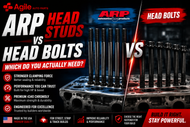
When building or upgrading an engine, one of the most common questions enthusiasts and professional builders ask is whether they should use ARP head studs vs head bolts. While both options serve the same purpose of securing the cylinder head to the engine block, they are designed differently and offer distinct advantages depending on your application.
Whether you're rebuilding a Small Block Chevy, installing an ARP main stud kit Ford 4.6, or upgrading a high-horsepower turbocharged engine, choosing the correct fasteners can significantly impact engine reliability, sealing performance, and long-term durability.
In this guide, we'll explain the differences between ARP head studs and head bolts, discuss when each option makes sense, and help you determine which solution is best for your build.
Why Engine Fasteners Matter More Than Most Builders Realize
The cylinder head experiences tremendous pressure and heat during combustion. Every power stroke attempts to lift the cylinder head away from the engine block. The fasteners must maintain clamping force despite extreme temperature changes and thousands of combustion cycles.
Many factory fasteners are designed for stock power levels and everyday driving. Once horsepower increases or forced induction is added, stronger fasteners become essential.
This is where ARP has earned its reputation among racers, engine builders, and performance enthusiasts. Their premium fasteners are manufactured to precise tolerances using high-strength materials designed to withstand demanding operating conditions.
Understanding ARP Head Bolts
Head bolts are threaded directly into the engine block and tightened to specification. Once installed, they provide the necessary clamping force to keep the head gasket sealed.
For many naturally aspirated street vehicles, quality ARP head bolts provide more than enough holding power. They are often easier to install because the cylinder head can be positioned first, followed by the bolts.
Head bolts are particularly popular for daily drivers, mild performance builds, and situations where engine compartment clearance is limited. Because the bolts are removed completely during service, cylinder head removal can sometimes be easier in tight engine bays.
Many builders choose ARP head bolts when performing a straightforward engine refresh or restoration project that doesn't involve significant horsepower increases.
Understanding ARP Head Studs
Head studs function differently. The stud is threaded into the engine block first, and the cylinder head is installed over the studs. Washers and nuts are then tightened on top.
This design offers several important advantages.
Because the stud remains stationary during tightening, torque is applied more accurately. The fastener experiences less twisting stress compared to a bolt, resulting in more consistent clamping force.
The improved clamping load helps maintain head gasket integrity under higher cylinder pressures. This is one reason why ARP head studs small block Chevy builds are extremely common among performance enthusiasts.
For supercharged, turbocharged, nitrous-equipped, or high-compression engines, head studs often become the preferred choice.
The Clamping Force Advantage
One of the biggest reasons builders choose studs is superior clamping consistency.
When tightening a head bolt, part of the applied torque is lost to friction as the bolt rotates inside the block. This can create slight variations in final clamping force between fasteners.
Head studs eliminate much of this variable because the stud remains stationary while the nut is tightened. This results in more accurate preload and improved gasket sealing.
The advantage becomes increasingly important as cylinder pressures rise. Engines producing substantial horsepower can quickly expose weaknesses in the sealing system.
For builders pushing performance limits, ARP studs provide an extra margin of confidence.
When Head Bolts Make More Sense
Not every engine requires head studs.
For stock rebuilds, lightly modified street vehicles, and restoration projects, ARP head bolts often provide excellent performance while reducing installation complexity and cost.
If the engine will remain naturally aspirated and operate near factory power levels, premium ARP bolts may deliver all the strength needed for years of reliable service.
Many daily-driven trucks, SUVs, and passenger vehicles benefit from ARP head bolts without requiring the additional investment associated with studs.
If future power upgrades are unlikely, bolts can be a practical and cost-effective solution.
When to Use ARP Studs
Understanding when to use ARP studs is critical for serious performance builds.
If your engine includes forced induction, high compression, racing applications, or frequent high-RPM operation, studs become increasingly valuable.
Turbocharged diesel trucks, drag racing engines, boosted LS builds, and competition Small Block Chevy engines often rely on ARP studs to maintain proper head gasket sealing under extreme conditions.
Engines producing substantial horsepower generate significantly greater cylinder pressures than factory designs. Studs help ensure the cylinder head remains securely clamped even during aggressive driving.
For builders investing thousands of dollars into engine upgrades, studs can serve as inexpensive insurance against costly failures.
Why ARP 4340 Chromoly Fasteners Are So Popular
One reason ARP dominates the performance fastener market is its use of premium materials.
Many performance products utilize ARP 4340 chromoly engine fasteners, a material known for exceptional tensile strength and durability.
Compared to standard factory fasteners, chromoly fasteners offer significantly improved resistance to stretching and fatigue.
This strength allows builders to maintain reliable clamping force under severe operating conditions. Whether used in cylinder heads, main caps, connecting rods, or drivetrain components, ARP fasteners are trusted by professionals worldwide.
For performance applications where reliability matters, material quality can make a substantial difference.
Small Block Chevy Builders Frequently Choose Studs
The Small Block Chevy platform remains one of the most popular engines ever produced.
Performance enthusiasts frequently upgrade to ARP head studs small block Chevy builds because these engines are commonly modified with aftermarket cylinder heads, higher compression ratios, aggressive camshafts, and power adders.
As horsepower increases, head gasket sealing becomes increasingly important. Studs help maintain consistent clamping force while reducing the risk of gasket failure.
For builders investing in a complete Small Block Chevy engine rebuild, upgrading fasteners often represents a logical step toward long-term reliability.
Ford Modular Engines Also Benefit from ARP Hardware
Ford enthusiasts frequently upgrade engine fasteners during performance builds.
Products such as the ARP main stud kit Ford 4.6 have become popular among Mustang owners and modular engine builders seeking improved bottom-end strength.
As power levels increase, maintaining precise fastener preload becomes critical. High-quality ARP hardware helps reduce block movement and improves overall durability.
Whether building a street car or track-focused project, stronger fasteners provide added confidence when pushing performance limits.
Cost Comparison: Are Studs Worth the Extra Money?
Head studs generally cost more than comparable head bolts.
However, evaluating cost alone doesn't provide the full picture. The decision should be based on engine goals, expected power levels, and intended use.
For a basic commuter vehicle, the additional expense may not deliver meaningful benefits.
For a turbocharged race engine, the cost difference is minimal compared to the potential expense of head gasket failure, downtime, and engine repairs.
When viewed as a long-term reliability upgrade, many builders consider studs a worthwhile investment.
Which Option Should You Choose?
The answer depends entirely on your build.
If you're rebuilding a stock or mildly modified engine, ARP head bolts typically provide excellent performance and reliability.
If you're building a high-performance engine, adding forced induction, increasing compression, or planning future horsepower upgrades, ARP head studs are often the smarter choice.
The good news is that both options represent a significant upgrade over many factory fasteners. Choosing quality ARP hardware helps ensure your engine remains properly sealed and reliable under demanding conditions.
Final Verdict
The debate surrounding ARP head studs vs head bolts ultimately comes down to intended use.
Head bolts are ideal for stock and mild performance applications where simplicity and affordability are priorities. Head studs provide superior clamping consistency and additional protection for high-performance engines operating under extreme conditions.
If your goal is maximum reliability, stronger sealing performance, and long-term durability, ARP studs often provide the greatest advantage.
At Agile Auto Parts, we offer a wide selection of premium ARP performance fasteners for engine builders, racers, and automotive enthusiasts across the United States.
Browse our selection of genuine brand-name performance engine components and fasteners here:
Find the right ARP hardware for your next engine build and shop with confidence at Agile Auto Parts.